Which Ddolbeng game? Pick by what you'd like your child to practise
Looking closely, copying colors, shape and balance, taking turns: the Ddolbeng village has a game for each. How to find them, and what each one asks of a child.
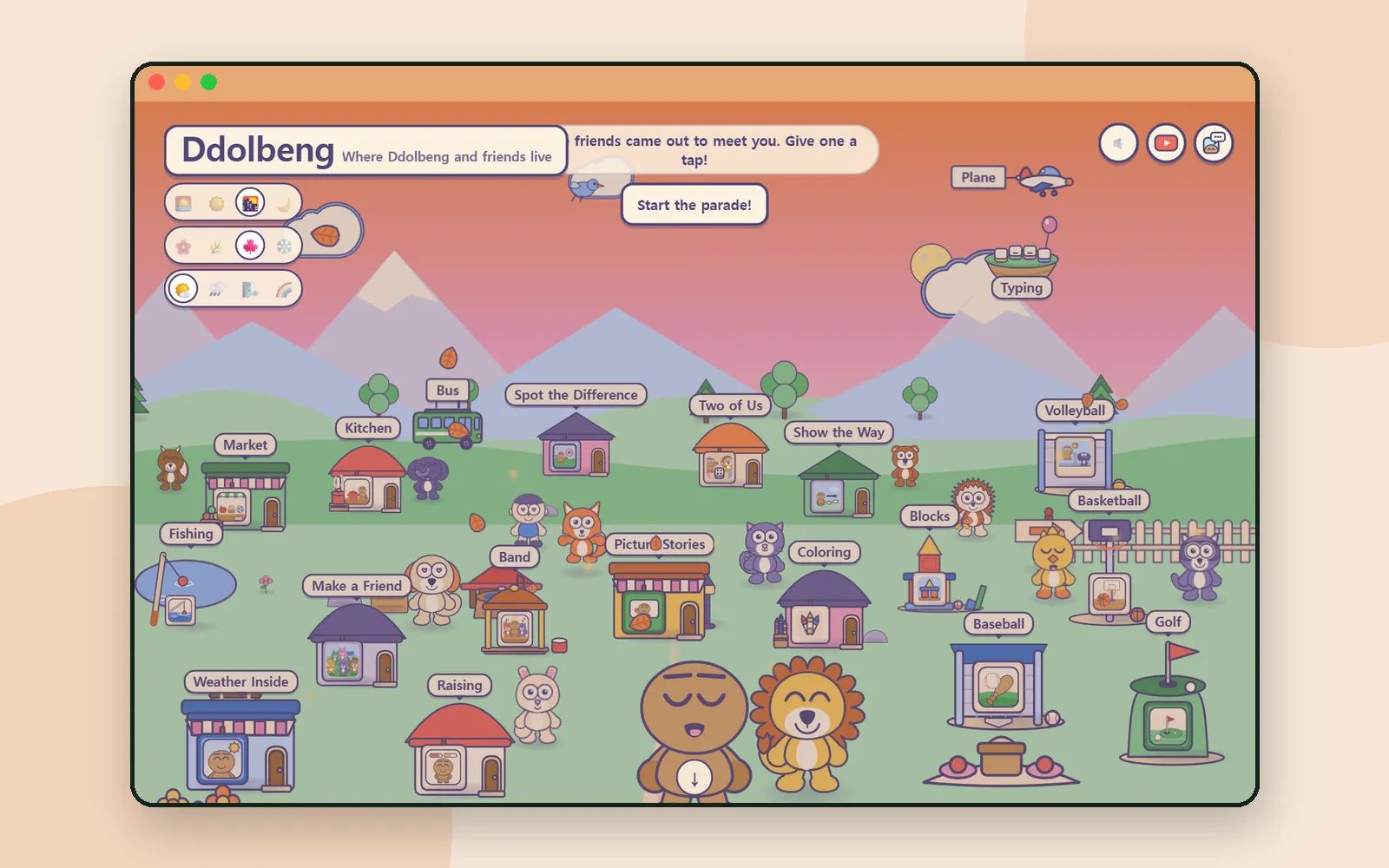
The Ddolbeng village has grown. Open it for the first time and you will probably wonder which game to start with.
One way to choose is to ask a different question: what would you like your child to practise? Looking closely, copying, building, waiting for a turn. Here is how to find the games, and what a few of them ask of a child. 🏡
Finding the games
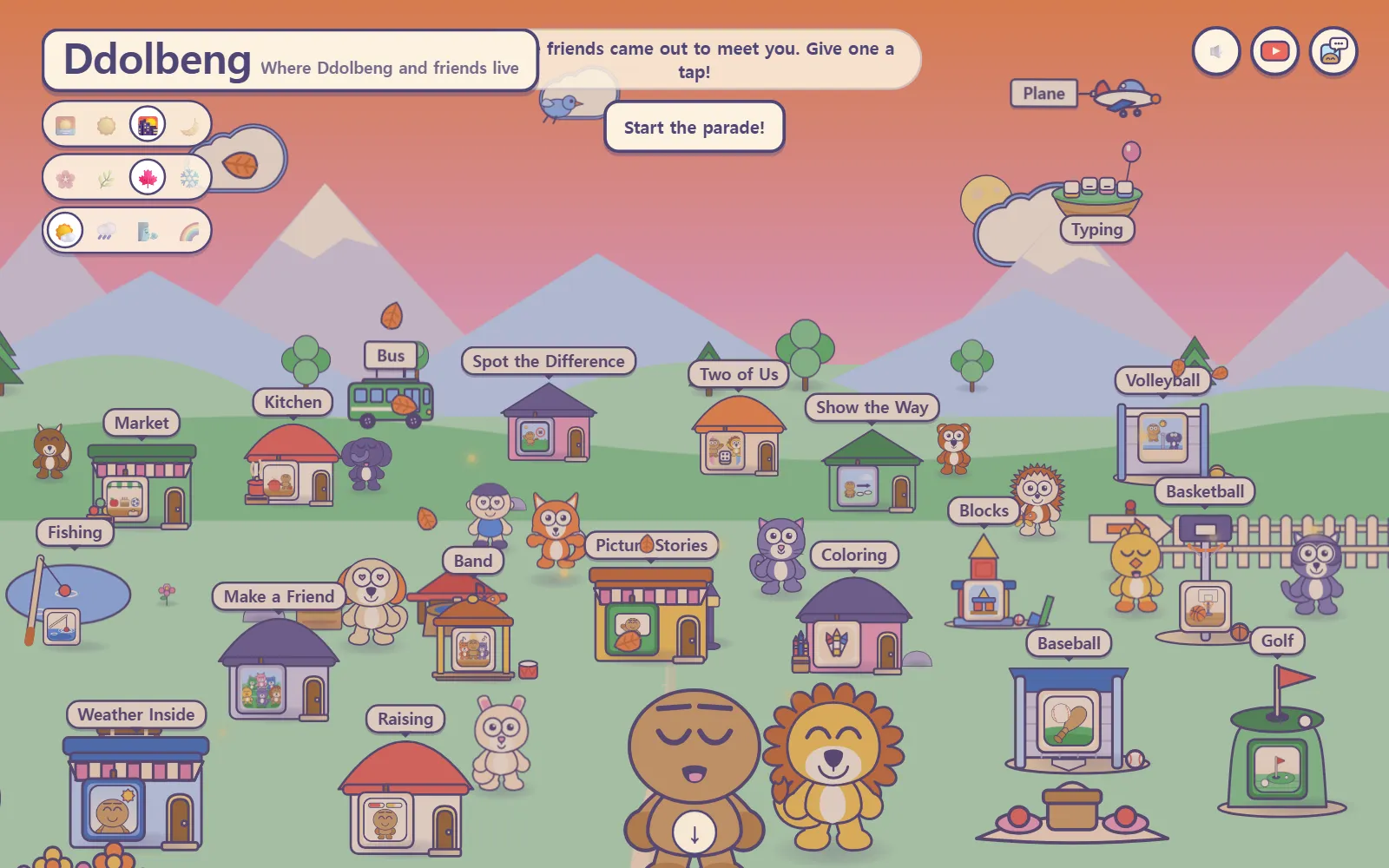
In the village, every game has its own building, with a short name and a picture of the game on it, so a child who cannot read yet can still find it. Tap a building and Ddolbeng runs to the door before the game opens.
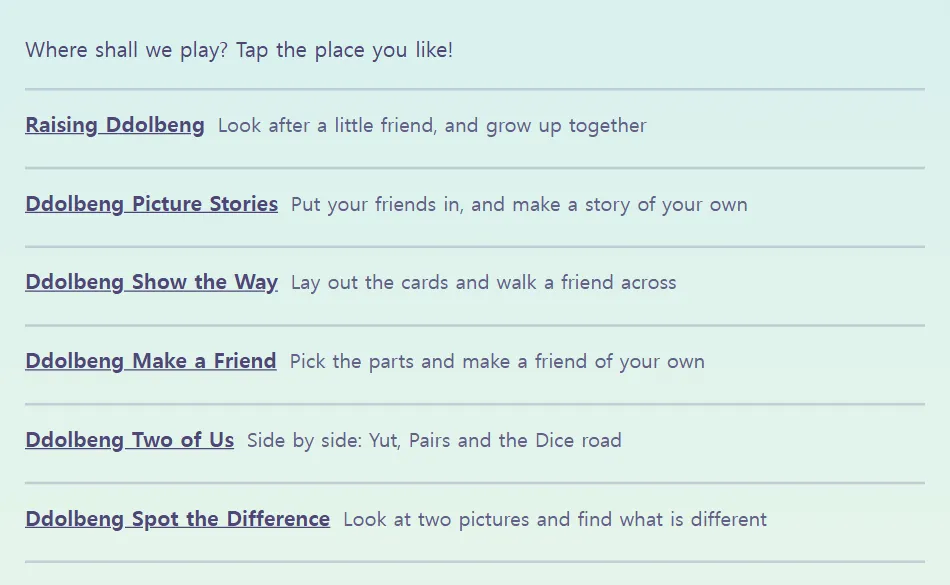
For grown-ups, the list further down the page is quicker. It starts with Where shall we play? Tap the place you like! and gives each game’s name with one line about it.
Looking closely: Spot the Difference
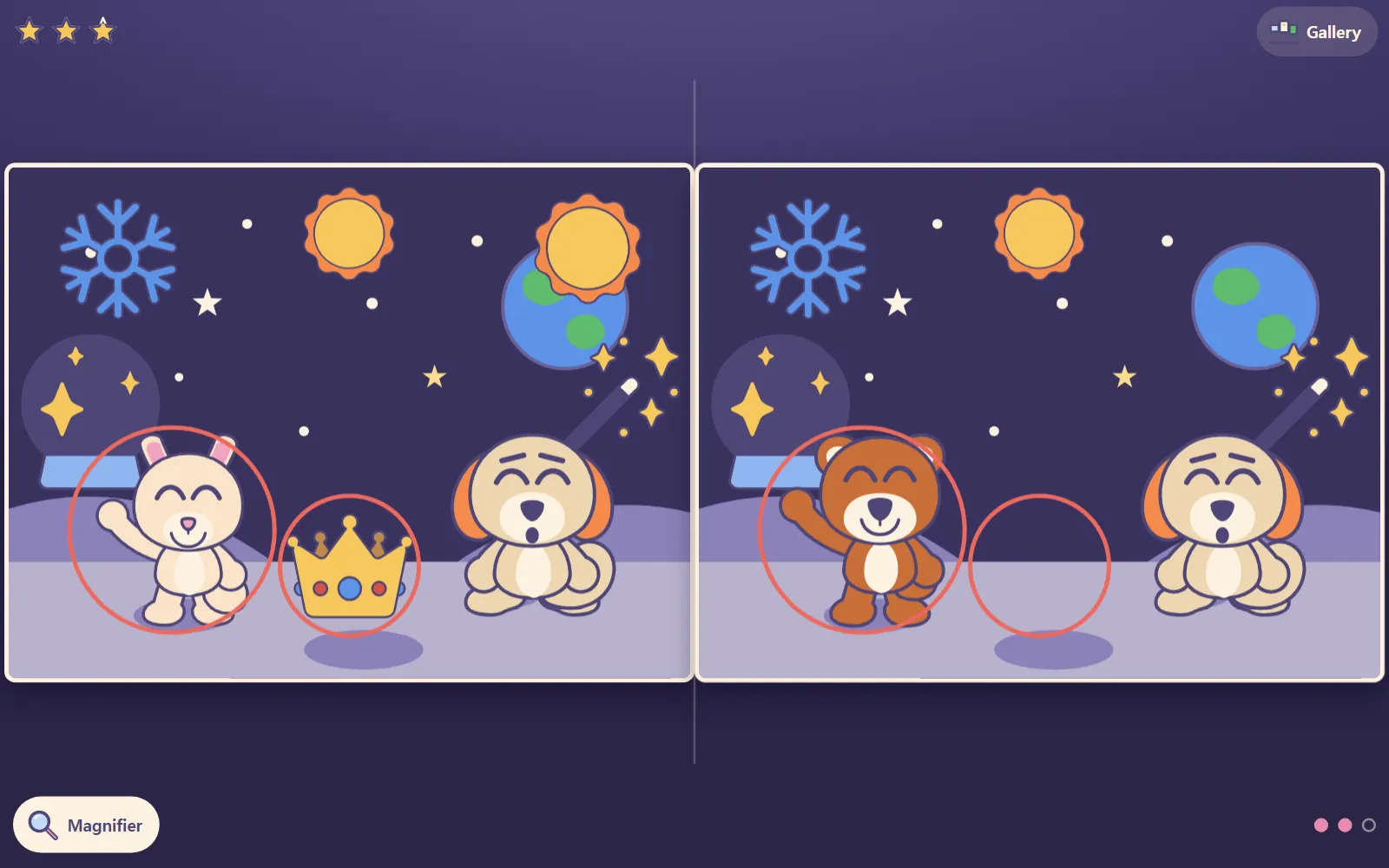
The same picture hangs twice. A few things are not the same, and tapping one draws a circle on both pictures at once.
Tapping everywhere at random costs a little of a star. The game’s reason is short: this is a looking game.
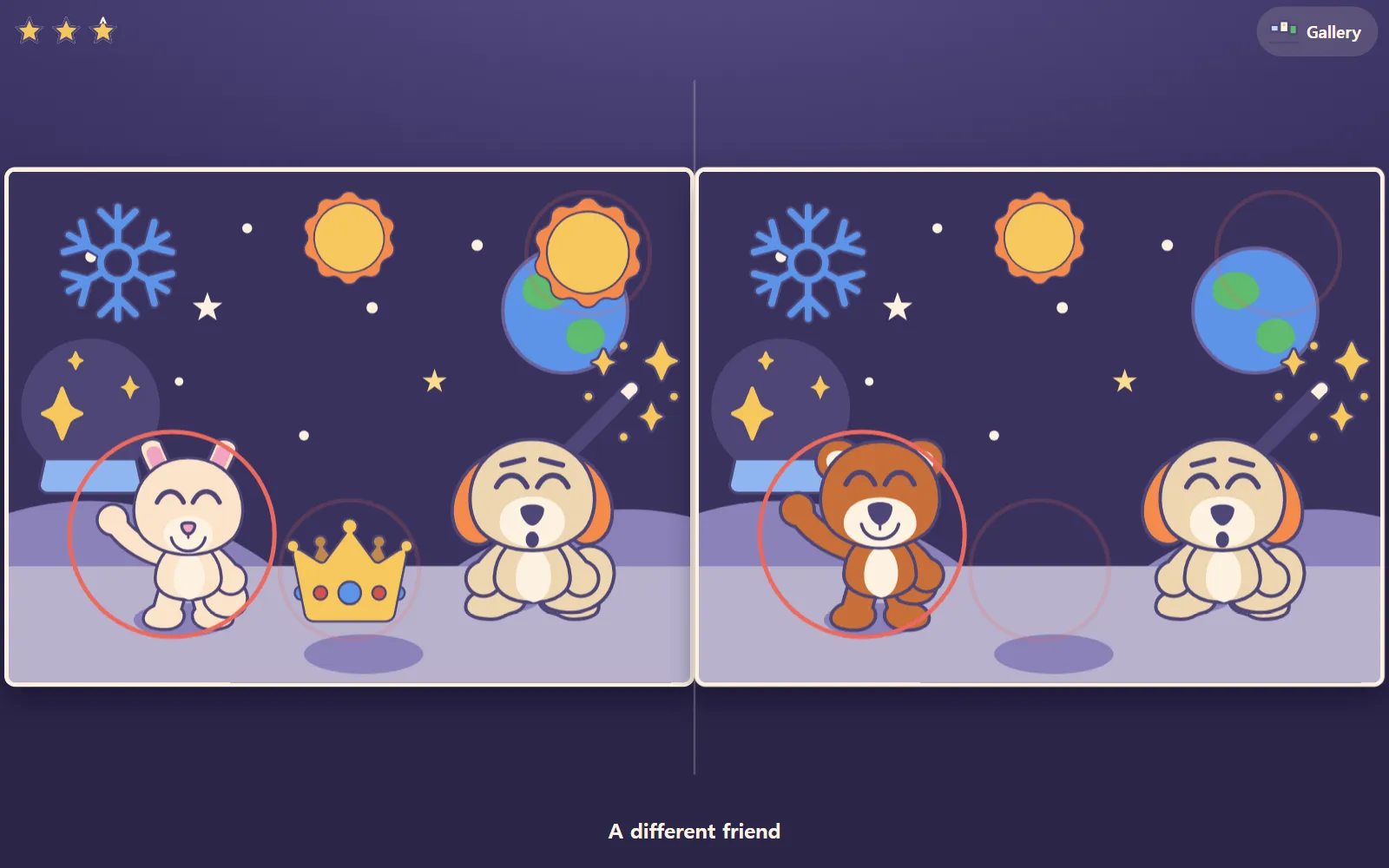
The part we like most comes at the end. When everything has been found, the game goes back over the differences one by one and puts a word to each: it went away, it moved, it feels different. Here it says A different friend. Finding a difference becomes saying what the difference is.
Copying and remembering: Coloring
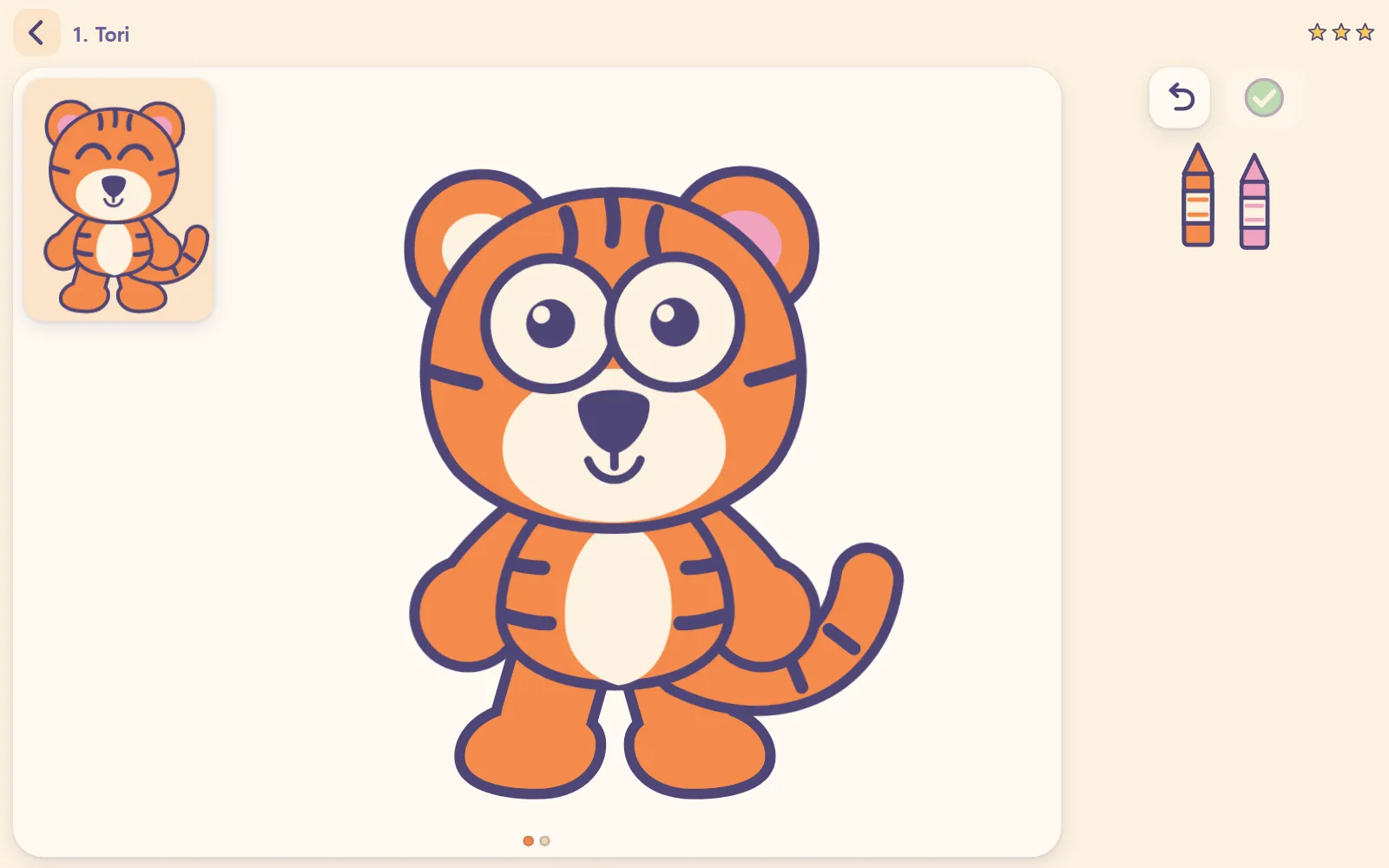
In Ddolbeng Coloring, a child picks a crayon and taps a part of a friend, and that part fills in at once. Nothing can go over the lines, so even the youngest can color on their own.
Copy the colors adds something to look at: a picture card in the corner. The child colors the friend the same way. Further up the steps there is one green to pick out of three similar ones, and at the top the card turns face down, so the child colors from memory.
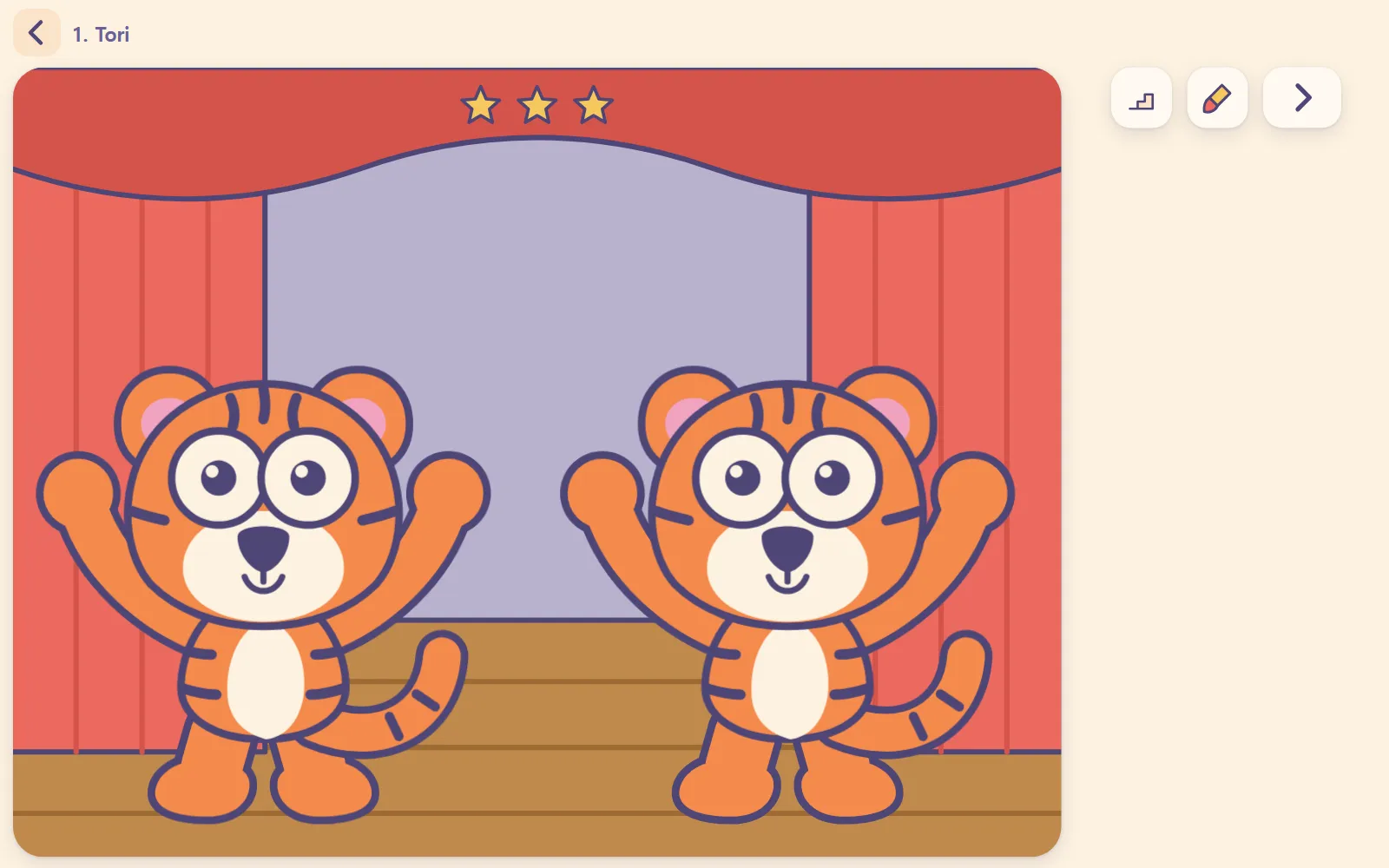
Press done and the real friend comes out to dance next to the one your child colored, like twins. It is also a natural moment to compare the two.
Shape and balance: Blocks
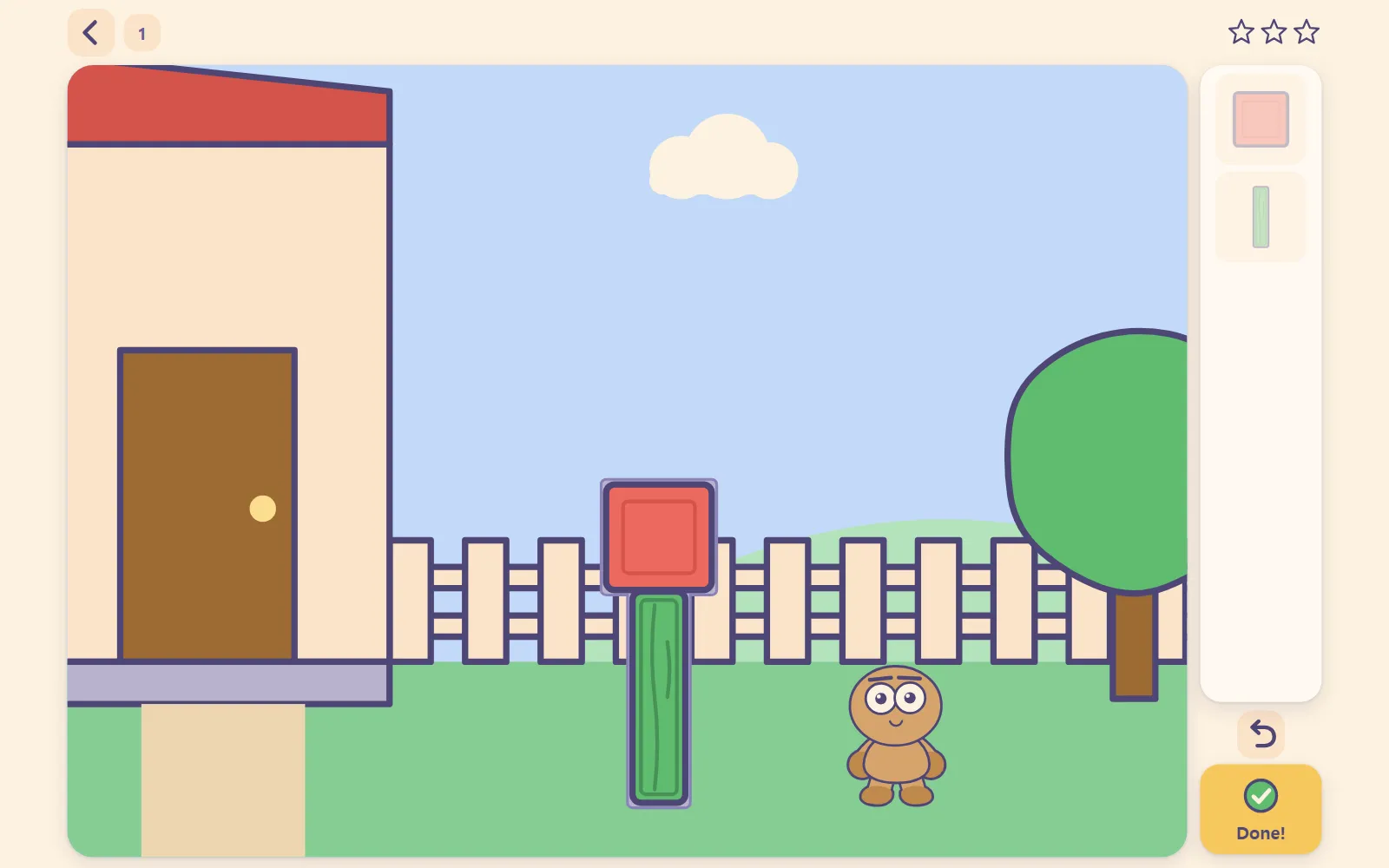
In Shadow Shapes, a purple shadow waits to be filled. The child drags blocks from the drawer until the shape is covered.
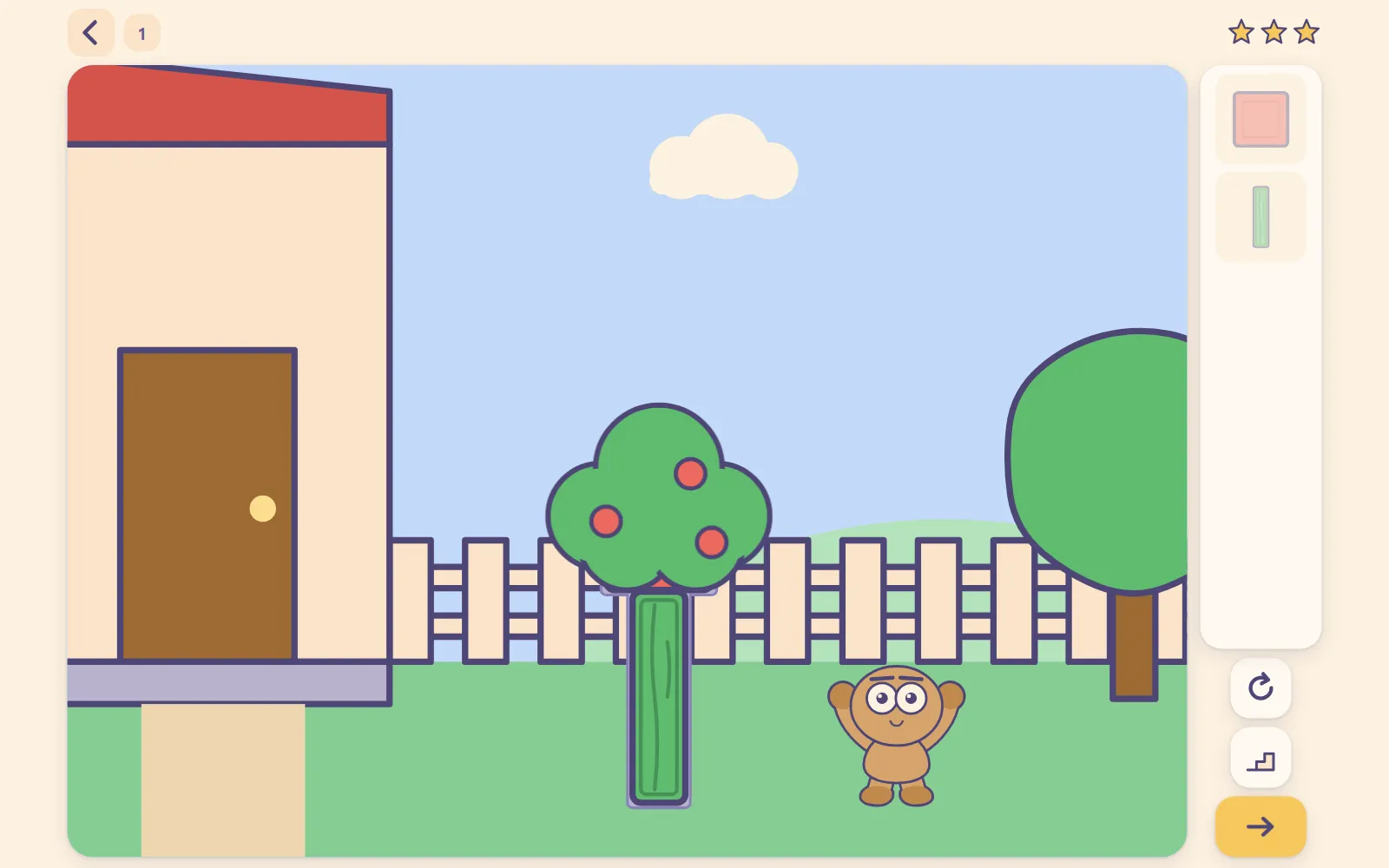
Fill it well and the picture comes alive. This shadow turns into an apple tree, and Ddolbeng cheers. The game’s own words for grown-ups: shape and balance, learned by playing.
A quick guide
Here is the same idea as a table. Each line is based on what the game’s first page says.
| If you’d like to practise… | Try |
|---|---|
| Looking closely, and putting a difference into words | Spot the Difference |
| Copying, then remembering | Coloring, Copy the colors |
| Shape and balance | Blocks, Shadow Shapes |
| Waiting for a turn, and counting the dots on a die | Ddolbeng Two of Us |
| Putting steps in order | Coding before reading: Ddolbeng’s path game |
| Timing, with a tap or a finger | Ddolbeng’s sports games |
Coming up next
Want to meet the friends in these games first? See Meet Ddolbeng and friends.
Next time: why a balloon pulls at your hair, with a Nudge simulation.
Frequently asked questions
Where do I find all the Ddolbeng games?
In the Ddolbeng village. Each game has its own building with its picture on it, and further down the page there is a list with each game's name and a one-line description.
How do I know what a game is for before my child plays it?
Open the game's first page. Most of them have a short section for grown-ups that says what the game asks of a child and what it does not have.
Which game is about looking closely?
Ddolbeng Spot the Difference. Tapping at random costs a little, because, as the game puts it, this is a looking game. When everything is found, it names what changed.
Does my child need to read?
No. The first pages of Coloring and Blocks both say there is nothing on the screen a child has to read.