Lifium: pick two living things and find where their branches meet
Lifium asks a simple question: how closely related are we? Pick a cat and a human, or a banana and a human, and watch two branches of the tree of life meet, with a range of dates and a badge that says how sure science is.
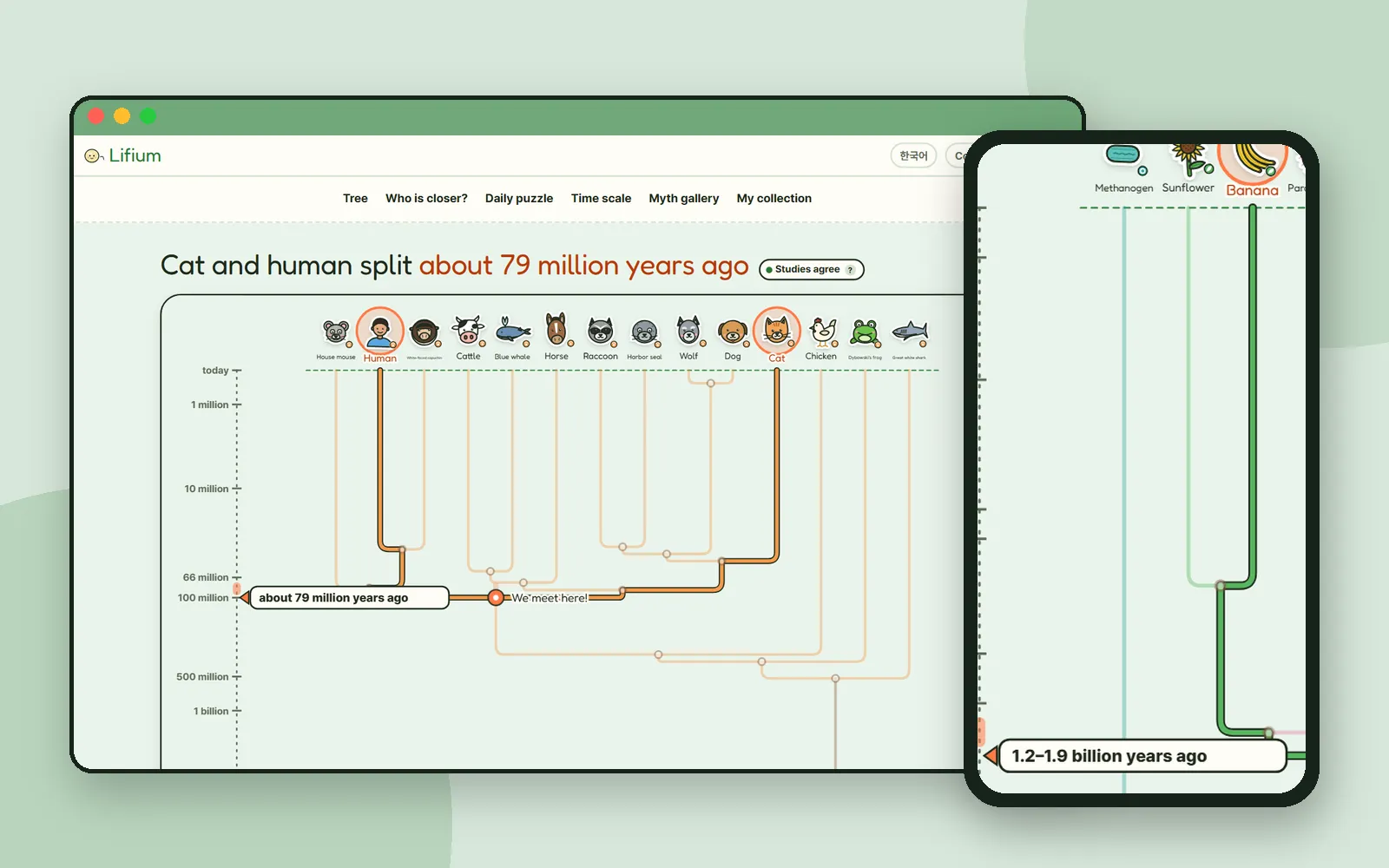
A cat and a person. A banana and a person. Are they related at all? Lifium says yes: All life is branches of one tree. Its question is the one on its front page, How closely related are we? 🌳
Two living things, one question
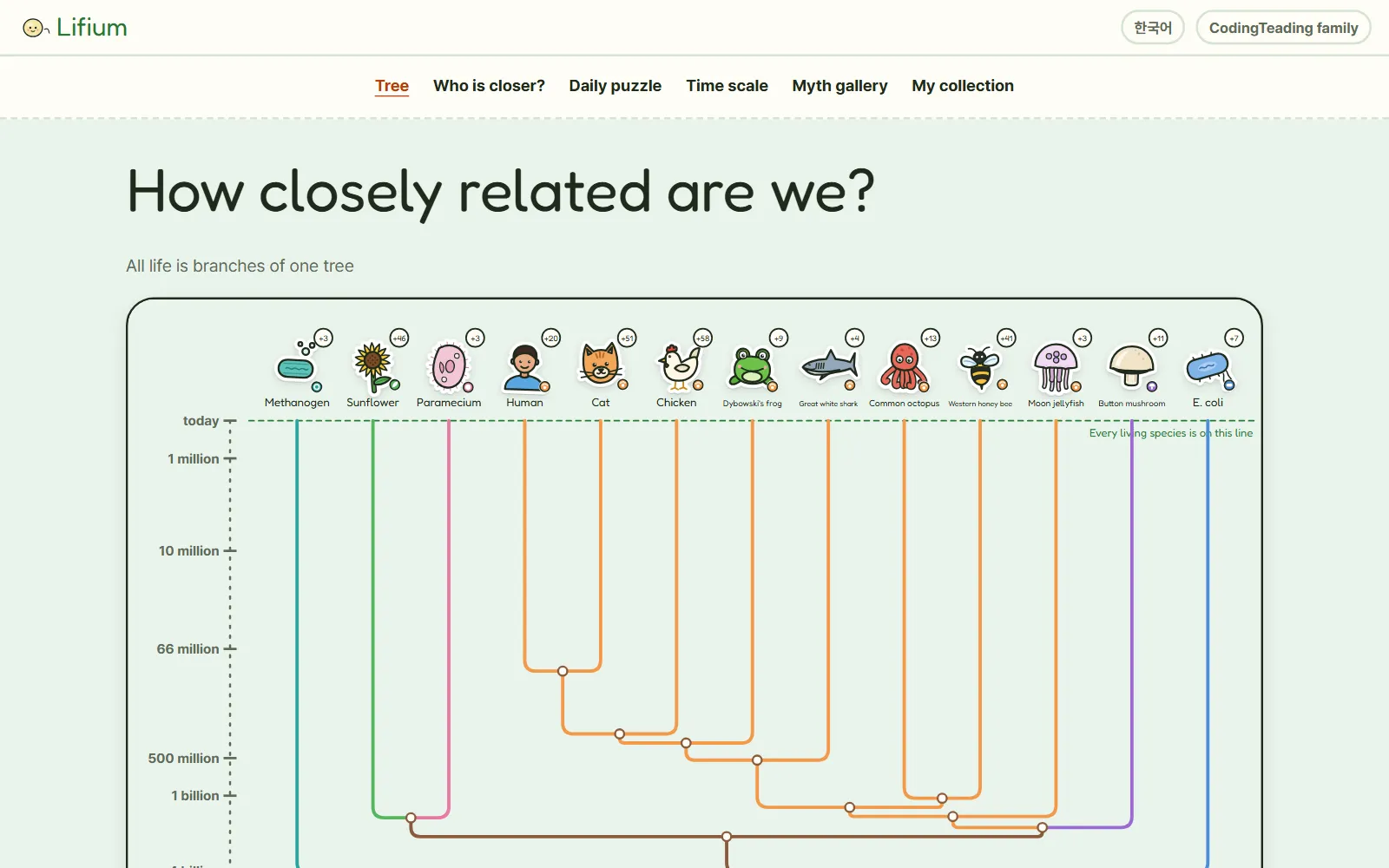
Along the top of the tree sit living things, from a cat and a human to a sunflower, a mushroom and E. coli. Every one of them sits on the same “today” line. Pick a First living thing and a Second living thing, and Lifium takes you to the page for that pair.
A cat and a human
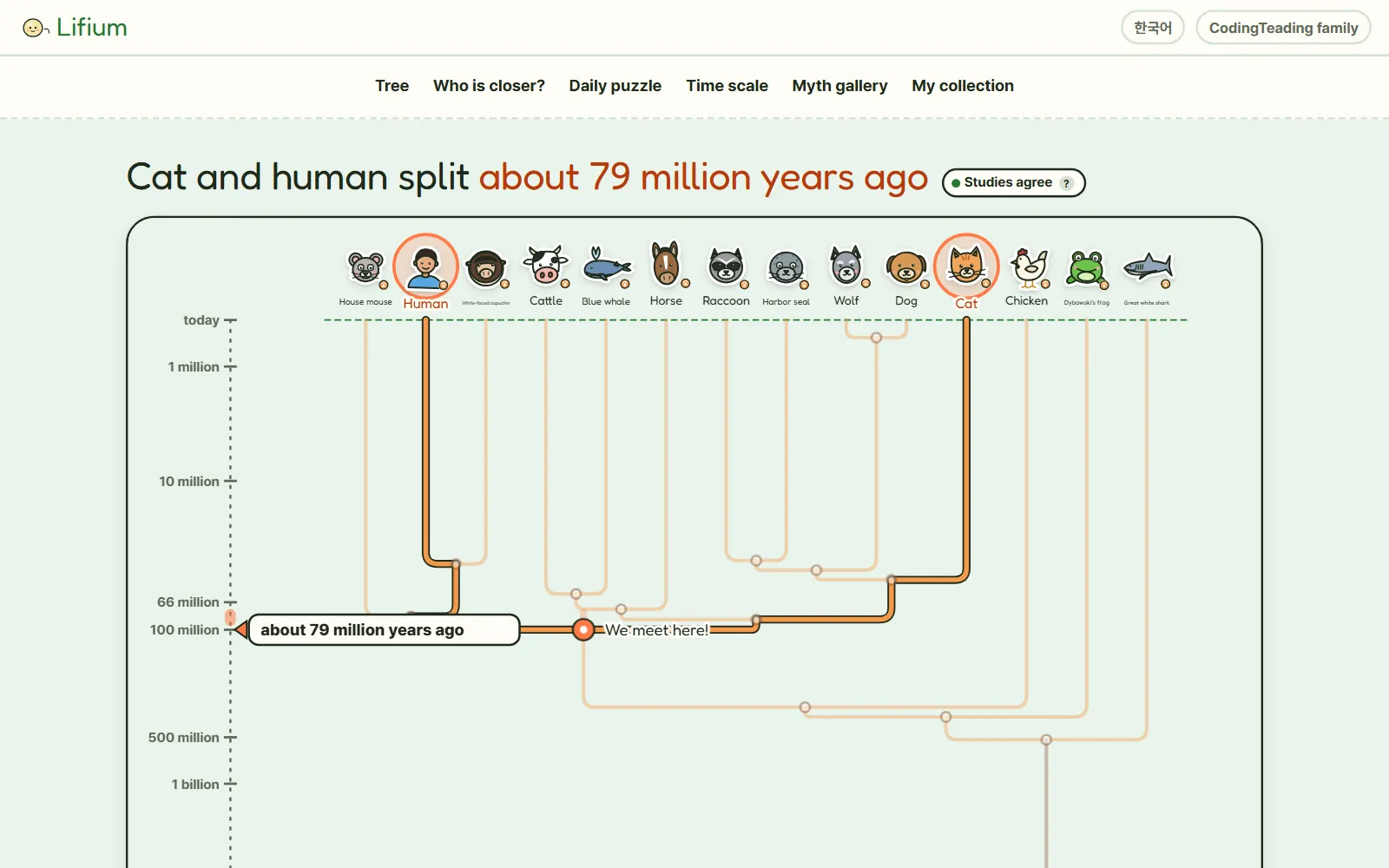
The answer arrives as one sentence: Cat and human split about 79 million years ago. Then two branches run down the tree until they join at a point marked We meet here!
Right under the answer is the range: 70–100 million years ago, with the badge Studies agree, meaning several studies give similar dates. The page also places the moment in Earth’s history, around the Cretaceous, and calls the pair Cousins on its kinship scale.
The ancestor at that meeting point is long gone. The little character the site draws for it is imagined, and the site says so: nobody knows what it really looked like.
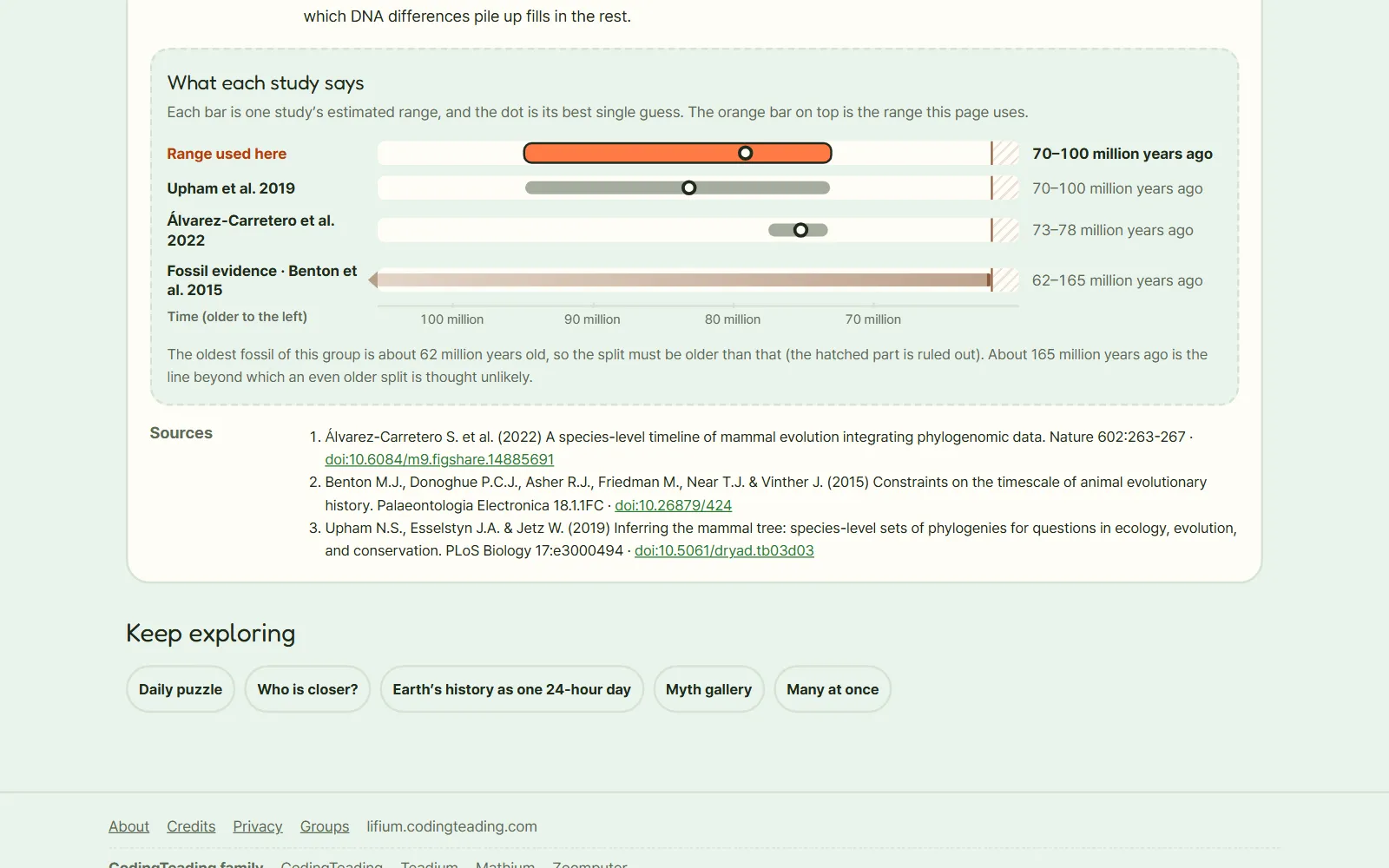
Scroll down to What each study says. Each bar is one study’s estimate, the orange bar on top is the range the page uses, and the fossil evidence shows which dates are ruled out: the oldest fossil of the group is about 62 million years old, so the split must be older than that.
That one chart is a good way to show a child how science works with dates: not a single magic number, but several estimates, checked against evidence.
A banana and a human
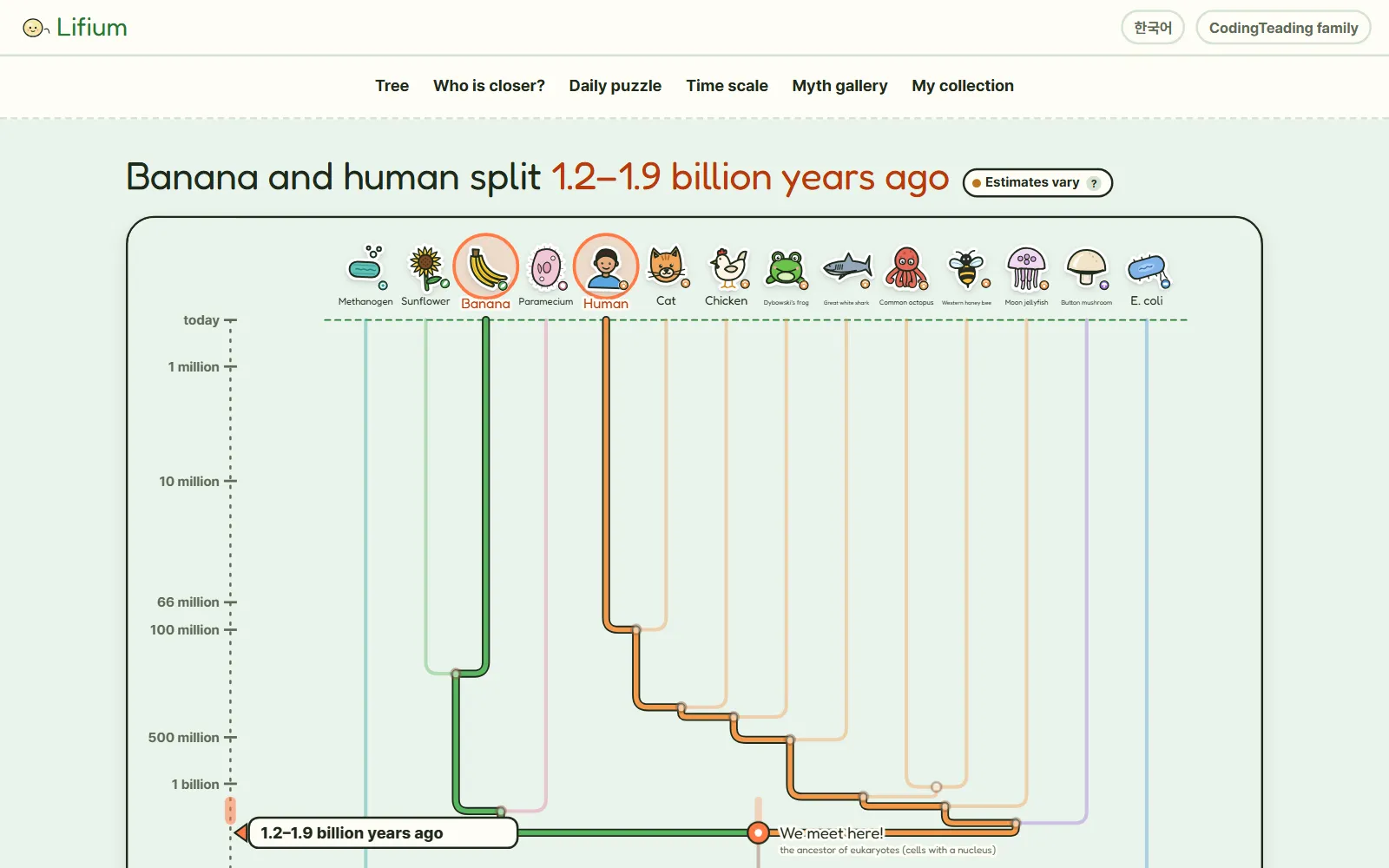
Now a surprising pair. Banana and human split 1.2–1.9 billion years ago. This time there’s no single date at all, only the range, and the badge is Estimates vary: Look at the whole range, not one number. The two branches meet all the way down near the ancestor of cells with a nucleus.
Lifium uses three badges in all: Studies agree, Estimates vary and Scientists disagree, the last for cases where experts don’t even agree on the order of the branches.
Myths, held up to the tree
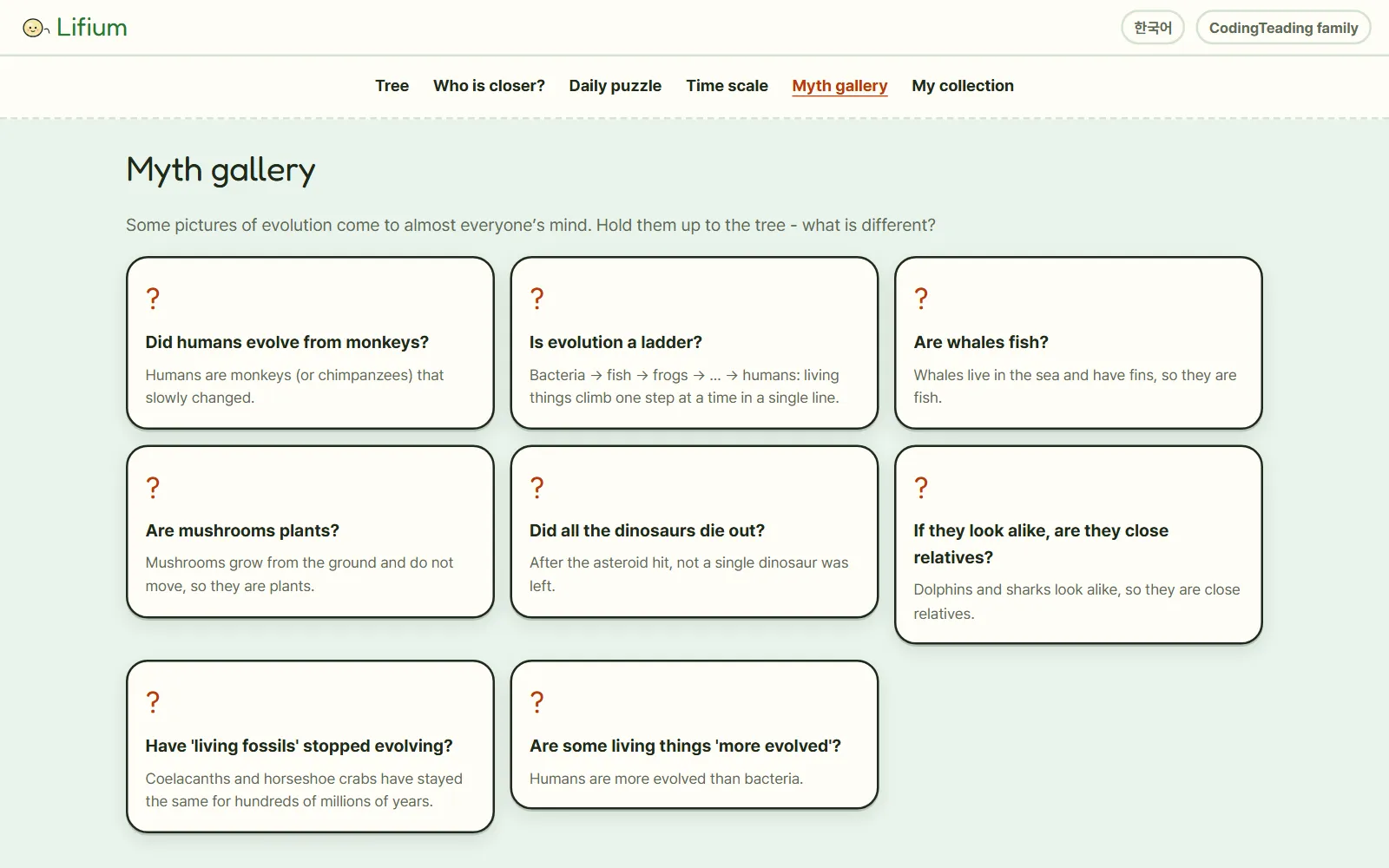
The Myth gallery collects the pictures of evolution that come to almost everyone’s mind, such as Did humans evolve from monkeys?, Is evolution a ladder? and Are whales fish?, and holds each one up to the tree. Humans and chimpanzees, for instance, turn out to be cousins who split from a shared ancestor, not one descended from the other.
Keep exploring
Lifium belongs to the same family as Teadium, the online science museum, and Mathium, the museum of moving proofs.
Frequently asked questions
What does Lifium do?
You pick two living things, and Lifium shows on the tree of life roughly when they split from a common ancestor, as a range of dates with a badge saying how much the studies agree.
Why does it give a range instead of one date?
Because different studies estimate different dates. Lifium shows the range it uses, each study's estimate as a bar, and fossil evidence that rules some dates out.
Which languages is it in?
English and Korean. Its wording and dates are still being reviewed, so some may change.
Do you need an account?
No. There is no sign-up, and your collection stays in your browser.